By Balveer Singh Rathore, Editor · Last updated: September 25, 2026 · How we write
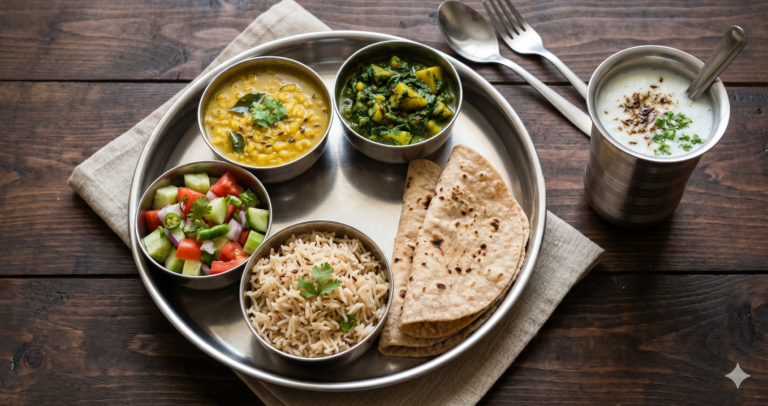
A good Indian diet plan for weight loss keeps everyday foods like dal, roti, sabzi, curd and rice, but controls portions, oil and sugar to create a moderate calorie deficit. Fill half your plate with vegetables, a quarter with dal, paneer or other protein and a quarter with whole grains or millets. Aim to lose about 0.5 kg a week.
⚠️ Medical Disclaimer: This article is for general educational purposes only and is not a substitute for professional medical advice. The calorie targets and meal plans below are general examples, not personalised prescriptions. Before starting any weight-loss diet — especially if you are pregnant or breastfeeding, or have diabetes, PCOS, thyroid issues, or any other medical condition, or take regular medication — please consult a qualified doctor or a registered dietitian.
If you have been searching for an Indian diet plan for weight loss that does not ask you to give up dal, roti and rice, you are in the right place. This is a complete, science-informed 7-day vegetarian plan built entirely around everyday Indian ingredients you can find at any kirana store.
You have tried cutting carbs. You have downloaded calorie-counting apps. You have watched YouTube workouts at 6 a.m. And yet the rice still feels like the enemy, the dal gets labelled “too heavy,” and every “clean eating” guide you find is built around quinoa bowls and Greek yogurt parfaits that have zero relationship with how your family actually cooks.
Here is what nobody tells you: the problem was never Indian food. The problem was trying to force-fit a diet designed for an entirely different cuisine, body type, and food culture onto your plate.
India has one of the world’s richest nutritional traditions — high-fibre legumes, anti-inflammatory spices, fermented foods, and whole grains that have fed diverse populations across centuries. A genuine Indian diet plan for weight loss does not ask you to give up dal, roti, or even occasional rice. It asks you to understand which versions of these foods work for your metabolism, how much oil is actually going into your kadai, and how to build a week of meals that keeps you full, satisfied, and consistently in a calorie deficit — without feeling like you are eating diet food.
Why Generic Weight Loss Diets Fail Indians (And What Works Instead)
The Calorie-Counting Myth: Why Carbohydrate Quality Matters for South Asian Metabolism
Generic calorie-counting advice tends to treat all carbohydrates the same. A gram of rice starch and a gram of lentil starch clock in at the same 4 calories on paper. But your body does not process them identically, and for people of South Asian descent, that distinction matters more than it does for most.
Research has noted that South Asian populations tend to show higher insulin resistance at lower body weights compared to European populations — a phenomenon sometimes called “thin-fat” or metabolically obese normal weight. This means the type of carbohydrate, its fibre content, and how quickly it converts to glucose (its glycemic load) matters enormously, not just the raw calorie number.
The ICMR-National Institute of Nutrition Dietary Guidelines for Indians (2024) advise getting no more than 45% of calories from cereals and millets and up to 15% from pulses, beans and meat, with the rest from nuts, vegetables, fruits and milk. Critically, the guidelines also emphasise the quality of those carbohydrates. Heavily refined carbs like white rice in large portions, maida-based breads, and sweetened beverages are metabolically different from the same calorie count coming from whole moong dal, bajra roti, or parboiled rice with vegetables.
This is why the app that tells you “you have hit your 1,500 calories” after a lunch of white rice, dal fry cooked in three tablespoons of oil, and two gulab jamuns is technically accurate — and practically useless for weight loss.
Hidden Calories in “Healthy” Indian Foods: The Ghee, Oil, and Sugar Trap
Indian food has a deeply embedded portion-of-fat problem — not because fat is inherently bad, but because most home cooks genuinely do not track how much they are using. Just two extra tablespoons of oil or ghee a day adds roughly 240 calories, and in a tadka or gravy you won’t even notice it.
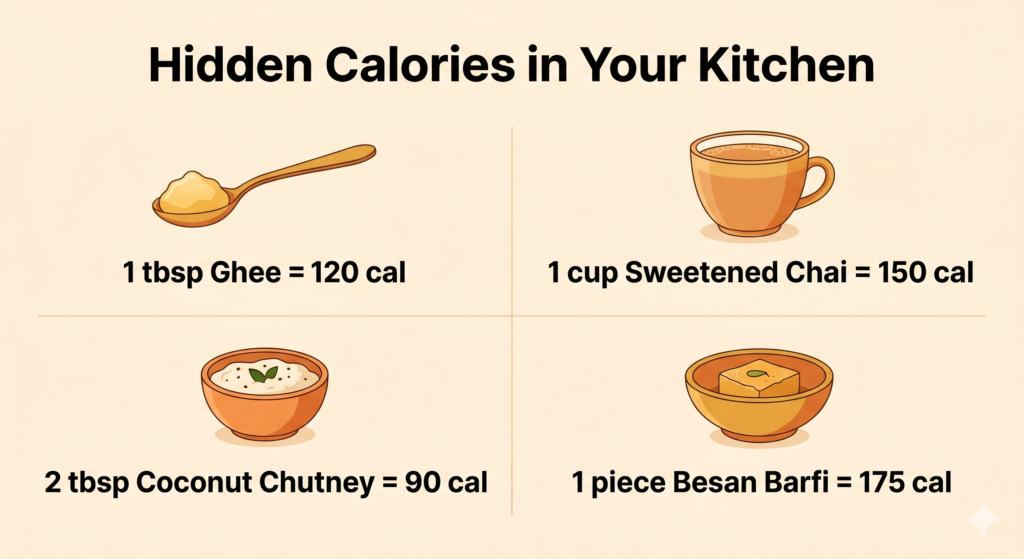
Some real numbers on things you might not have been counting:
- 1 tablespoon of ghee: approximately 120 calories. One ladleful into dal? That is often two tablespoons.
- 1 cup of sweetened chai (full-fat milk + 2 tsp sugar): 150 calories or more — and most people have two to three cups daily.
- One piece of homemade besan barfi: anywhere from 150–200 calories depending on the ghee ratio.
- 1 tablespoon of coconut chutney (coconut + oil version): easily 80–100 calories — for a condiment.
None of these foods are “bad.” But if you are eating them without awareness while wondering why the scale is not moving, these are the places to look first.
Why Indian Spices and Whole Grains Work in Your Favour
Indian cuisine — when cooked with the right proportions — is extraordinarily well-suited for weight loss. The ingredients already in your masala dabba do serious nutritional work.
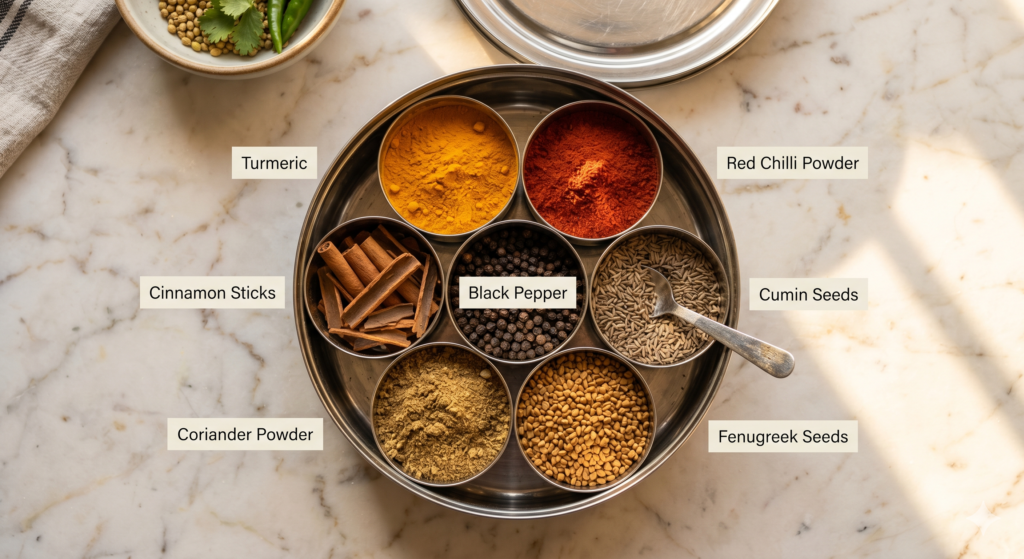
Spices as metabolic tools: Turmeric contains curcumin, a compound with well-documented anti-inflammatory properties that some research links to improved insulin sensitivity. Cumin (jeera) supports digestive enzyme activity and has been studied for its mild effect on BMI and waist circumference. Fenugreek (methi) seeds contain soluble fibre that slows glucose absorption. Cinnamon has been researched in the context of blood sugar regulation. You are not going to melt fat by adding spices, but using them liberally means you are building meals with active biochemical support baked right in.
Millets and traditional whole grains: Bajra (pearl millet), jowar (sorghum), and ragi (finger millet) were Indian dietary staples long before wheat became dominant. They are significantly higher in fibre than wheat flour, have a lower glycemic index, and keep you fuller longer. A bajra roti compared to a plain maida roti is not a minor nutritional upgrade — it is a different food category entirely.
Dal as a protein anchor: The combination of dal and rice is one of the oldest nutritional pairings in Indian cooking, and it works. Neither lentils alone nor rice alone provides all essential amino acids, but together they create a complete protein profile. That satiety you feel after a proper dal-chawal meal is not in your head — it is protein and fibre doing their job.
Quick Glycemic Index Comparison
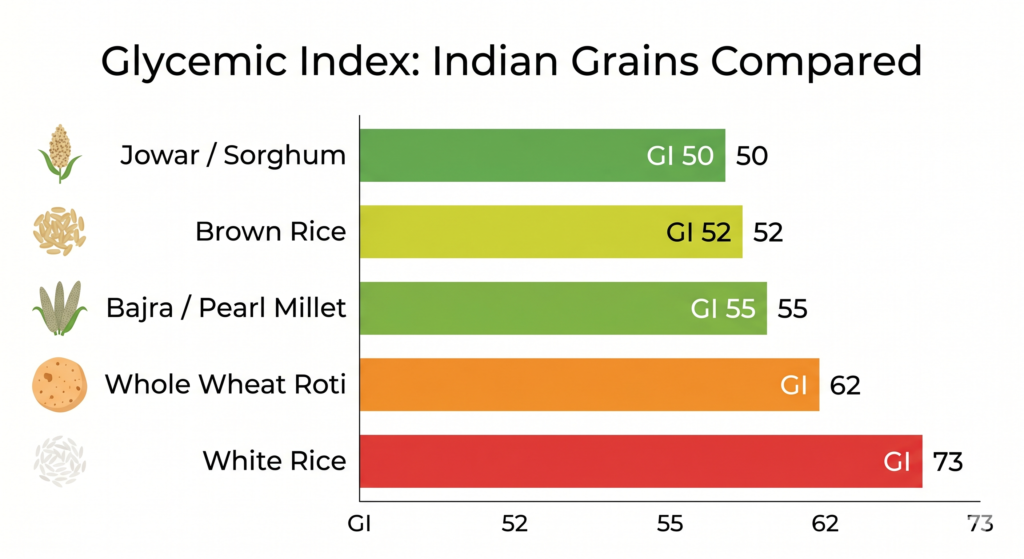
| Food | Glycemic Index (approx.) | Fibre per 100g cooked |
|---|---|---|
| White rice | 72–73 | 0.3g |
| Brown rice | 50–55 | 1.6g |
| Bajra (pearl millet) | 54–55 | 1.3g |
| Jowar (sorghum) | 49–52 | 1.7g |
| Whole wheat roti | 62 | 2.0g |
GI values vary based on cooking method and variety. Use these as relative comparisons, not absolute figures.
Regional Cuisine Variations: One Diet Does Not Fit All of India
India is not one food culture — it is dozens. A weight loss plan that works beautifully for someone in Punjab will feel alien to someone in Kerala. Effective meal planning respects this.
- North India (wheat-heavy): Roti, paratha, and dal-based meals are the foundation. Swapping refined atta for a multi-grain or bajra blend, reducing oil in sabzi, and adding more protein via paneer or legumes is the natural lever here.
- South India (rice and sambar-centric): Sambar is a nutritional powerhouse — lentils, tamarind, vegetables, and spices at under 100 calories a bowl. The challenge is white rice portion size. Shifting toward red rice, smaller portions, or adding a millet component makes a significant difference.
- East India (fish and leafy greens): Bengalis and Odiyas already eat a lot of lean protein via fish and dark leafy greens like pui saag. The primary adjustment is managing mustard oil quantities and rice portions.
- West India (coconut and coastal variety): Gujarati thalis can be surprisingly high in sugar — yes, in dals and sabzis — and Maharashtrian cooking uses a lot of groundnut oil. Being alert to those hidden sugars and fats is the main work here.
Indian Foods That Support Weight Loss
High-Protein Vegetarian Sources: Lentils, Legumes, and Paneer
Protein is the most important macronutrient for weight loss. It takes more energy to digest than carbs or fat, it preserves lean muscle as you lose fat, and it directly reduces hunger hormones. Most vegetarian Indians are chronically under-eating it — not because Indian food lacks protein sources, but because portions get skewed toward rice and bread.
Your core vegetarian protein toolkit:
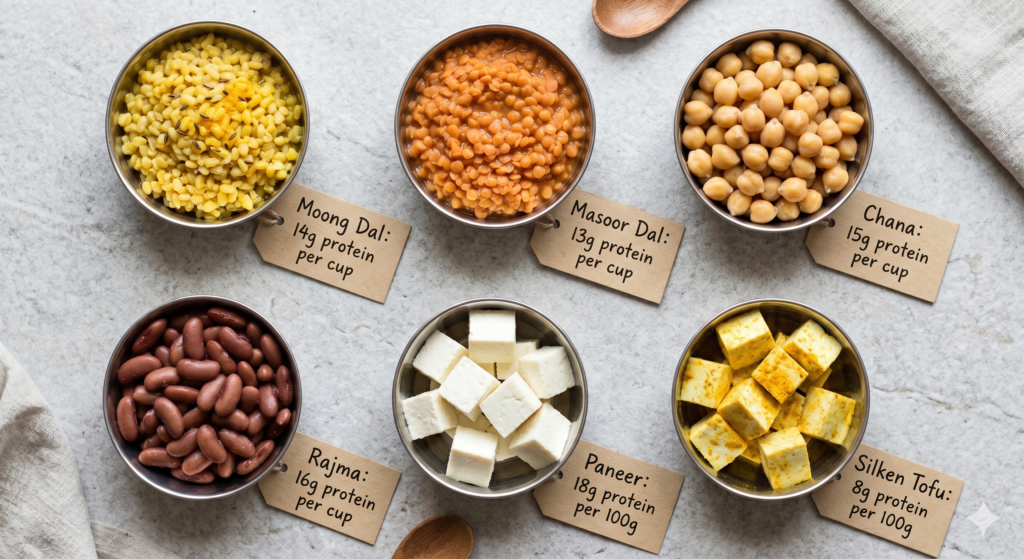
- Moong dal (cooked): One of the most digestible lentils, with roughly 7–8g protein per 100g cooked.
- Masoor dal (red lentil): Similar protein profile, high in iron, cooks fast.
- Chana (chickpeas): Dense, high-fibre, keeps blood sugar stable for hours. A cup of cooked chana has roughly 15g of protein.
- Rajma (kidney beans): Excellent protein and fibre combination, very satisfying.
- Low-fat paneer: About 160 calories per 100g with 18–20g protein. Use the low-fat variety and portion to 50–75g per meal.
- Tofu: Lower in calories than paneer (~80 cal/100g) with similar protein, takes on spices beautifully in a bhurji or curry.
The dal + rice pairing deserves its own note: rice provides methionine, which lentils lack; lentils provide lysine, which rice lacks. Together, they form a complete amino acid profile — the same logic behind the traditional Indian thali.
Weight-Loss Power Vegetables: The Indian Arsenal
Indian cooking uses a range of vegetables that are almost tailor-made for a calorie deficit. These are not “diet” foods — they are everyday sabzi ingredients that happen to be nutritionally excellent.
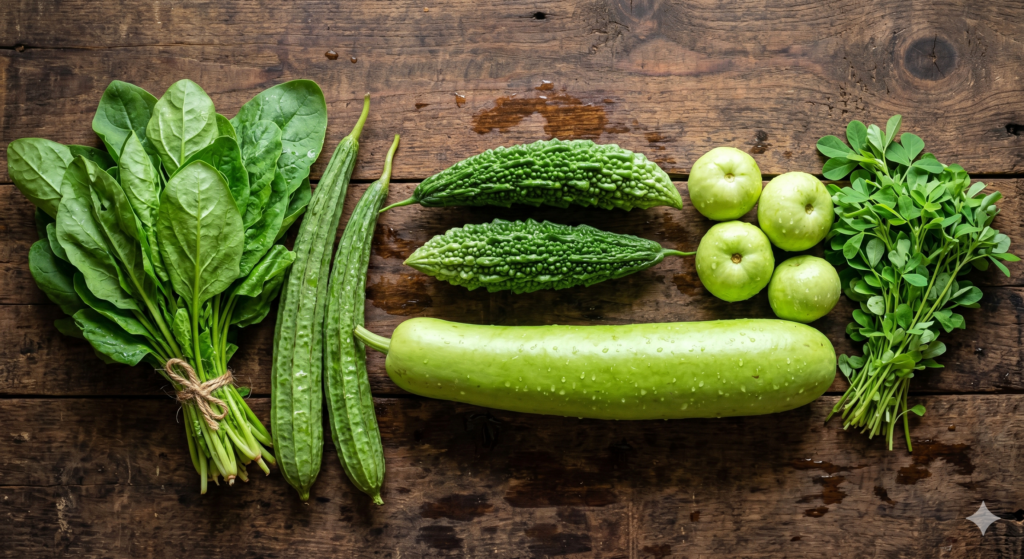
- Lauki (bottle gourd): Roughly 15–17 calories per 100g, high water content, extremely filling. Lauki ki sabzi and lauki dal are among the lowest-calorie satisfying meals you can make.
- Karela (bitter melon): Under 25 calories per 100g, and research supports its role in improving insulin sensitivity — particularly relevant for those managing PCOS or pre-diabetes.
- Tinda (apple gourd) and turai (ridge gourd): Both under 20 cal/100g, mild flavour, absorb spices well.
- Palak (spinach): Iron, folate, and about 23 calories per 100g. Palak dal and a low-oil palak paneer are excellent high-nutrition meals.
- Methi (fenugreek leaves): Bitter but powerful — high in fibre, supports blood sugar management, works brilliantly in methi paratha or methi dal.
- Tomatoes, onions, and garlic: The base of most Indian cooking and genuinely nutritious — antioxidants, quercetin, and allicin, all at very low calorie cost.
Whole Grains and Flour Alternatives
Switching your grain base is one of the highest-leverage single changes you can make. You do not need to eat brown rice every day — rotating through these options keeps meals interesting and nutritionally varied.
| Grain/Flour | Fibre per 100g | Approx. GI | Satiety Level |
|---|---|---|---|
| White rice | 0.3g | 72–73 | Low–Medium |
| Brown rice | 1.6g | 50–55 | Medium |
| Whole wheat atta | 10–12g | 60–62 | Medium–High |
| Bajra (pearl millet) | 9–10g | 54–55 | High |
| Jowar (sorghum) | 6–8g | 49–52 | High |
| Oats | 10g | 40–55 | High |
| Quinoa (cooked) | 2.8g | 53 | Medium–High |
GI and fibre values are approximate averages; actual values vary by preparation method.
A practical approach: use whole wheat atta for daily rotis, replace one rice meal per day with a millet grain or mixed millet roti, and use oats as a quick breakfast base when you need speed.
Healthy Fats to Use — Sparingly
Fat is not the enemy. But at 9 calories per gram, portion control is non-negotiable.
- Mustard oil: Traditional in North and East Indian cooking. Has a good omega-3 to omega-6 ratio and a high smoke point. One teaspoon per person per meal is a reasonable target.
- Cold-pressed coconut oil: Fine in small amounts for South Indian tempering, but not a health food you can use freely. It is predominantly saturated fat and delivers around 120 calories per tablespoon.
- Ghee: Nutritionally more complex than refined oils, but not a weight-loss shortcut. One teaspoon (not tablespoon) per day on a roti is reasonable within a controlled plan.
- Almonds and walnuts: 8–10 almonds or 4–5 walnut halves as a mid-morning snack provides healthy fats and protein, and keeps you out of the biscuit tin.
A note on coconut oil: Its marketing as a “metabolism booster” led many home cooks to switch to it believing it was a free pass. It is not. The medium-chain triglyceride (MCT) research behind this claim was done with concentrated MCT oil — not kitchen coconut oil, which contains far less MCT. At 120 calories per tablespoon, it needs to be portioned exactly like every other cooking fat.
Low-Calorie Indian Dairy
Dairy is deeply embedded in Indian food culture, and you do not have to remove it to lose weight. You do need to choose forms that work for you.
- Dahi (low-fat yogurt): Probiotic, filling, versatile. About 60–80 calories per 100g in the low-fat version. Use as a meal component, not just a condiment.
- Chhaach (buttermilk): One of the best weight-loss drinks in Indian cuisine. A glass of plain chhaach without added sugar is under 40 calories and aids digestion. Vastly better than sweetened lassi.
- Skimmed milk: Switching from full-fat to skimmed saves roughly 40–50 calories per glass — not dramatic alone, but meaningful over weeks.
- Paneer: Low-fat paneer at 50–75g portions is a genuinely powerful protein source. The mistake is either avoiding it completely (losing the protein benefit) or eating it in a cream-based gravy (losing the calorie benefit).
Weight-Loss Spices: Turmeric, Cumin, Fenugreek, and Cinnamon
These are not supplements to buy in capsule form. They are already in your masala dabba.
- Haldi (turmeric): Anti-inflammatory, supports insulin sensitivity, adds zero calories. Use freely.
- Jeera (cumin): Supports digestive enzymes and reduces bloating — a common issue when increasing fibre intake during a diet change. Jeera water in the morning is a traditional remedy with some supporting evidence.
- Methi seeds (fenugreek): Soaked overnight and consumed in the morning, or added to dal. The soluble fibre galactomannan slows glucose absorption.
- Dalchini (cinnamon): Small amounts in oatmeal or chai can help moderate the blood sugar impact of a carbohydrate-containing meal. A pinch is enough — do not overdo it.
Foods to Avoid or Limit on Your Indian Weight Loss Plan
The White-Flour Trap: Maida and Refined Products
Maida (refined white flour) is essentially wheat stripped of its bran and germ — the two parts that contain fibre, protein, and micronutrients. What is left digests almost as quickly as pure sugar, creates a rapid blood glucose spike, and leaves you hungry again within two hours.
The problem is that maida is everywhere in Indian snacking culture: samosa pastry, puri, bhatura, restaurant naan, white bread, khari biscuits, and most packaged baked goods. Even some atta sold as “whole wheat” in shops is a blend that is more refined than it appears — always check the label for “whole wheat” or “atta” as the first ingredient.
High-Calorie Cooking Methods and Fats
The same vegetable or protein can swing from diet-friendly to calorie-dense based purely on how it is cooked. This is where most Indian home kitchens quietly undermine otherwise sound food choices.
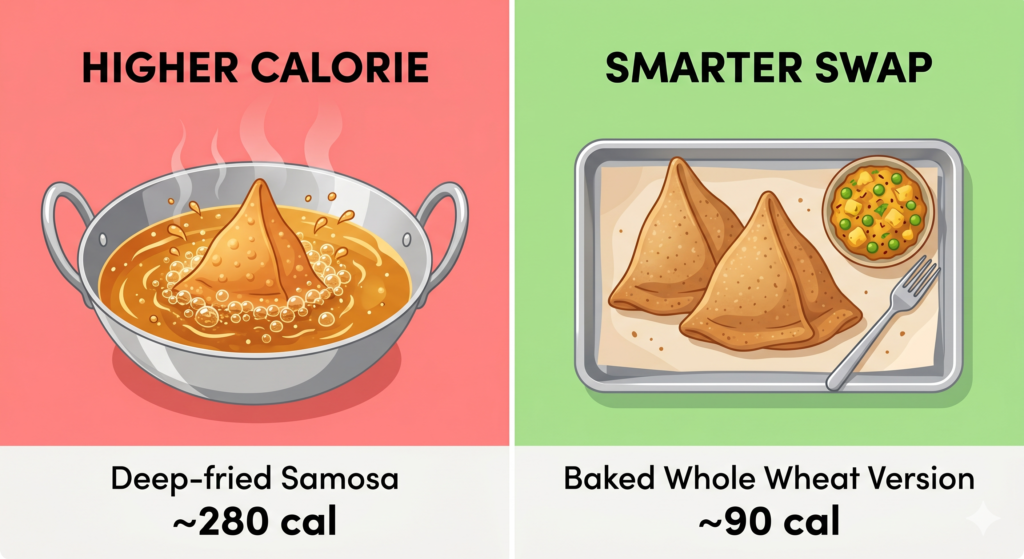
Deep-frying is the most obvious issue, but it is worth putting numbers on it. A single home-made or halwai samosa typically contains 250–300 calories and provides almost no satiety because the filling is mostly potato and maida pastry. The same spiced potato-and-pea filling baked inside a whole wheat shell lands closer to 80–100 calories. The food is essentially identical; the cooking method makes it three times more caloric.
The same math applies across common dishes:
- Pakoras and bhajiye: 300–400 calories per 6–8 pieces; chickpea batter soaks oil like a sponge.
- Puri vs. phulka roti: One deep-fried puri = 110–130 calories. One dry-roasted phulka = 60–70 calories.
- Dal tadka vs. plain pressure-cooked dal: Adding two tablespoons of ghee in the final tempering can add 240 calories to a pot of dal — invisible once it is served.
Practical rule: Reserve deep-frying for once-a-week occasions, not daily cooking. Shift your defaults to pressure cooking, dry roasting (bhunao), steaming, and shallow pan cooking with a measured teaspoon of oil.
Hidden Sugars in “Healthy” Indian Beverages
Liquid calories are the great saboteur of Indian weight loss attempts, because drinks do not register the same satiety signals as solid food. You can consume 400 calories in beverages before noon and feel no less hungry for it.
- Sweetened chai: Two cups daily with full-fat milk and two teaspoons of sugar each = approximately 300 calories and 20g of sugar before you have eaten anything. Switch to one cup with skimmed milk and half a teaspoon of sugar, or try unsweetened ginger-lemon tea between meals.
- Packaged fruit juices: A 200ml carton of “100% fruit juice” typically contains 90–100 calories and nearly zero fibre. Eat the fruit; skip the juice.
- Sweetened lassi: A full restaurant lassi with sugar or jaggery can reach 350–400 calories. Plain, unsalted chhaach at under 40 calories is the better choice.
- Sugarcane juice: Popular and “natural,” but a 300ml glass delivers roughly 180–200 calories and approximately 45g of fast-digesting sugar.
- Packaged malt health drinks: Products marketed as nutritious are often primarily sugar. Two tablespoons in full-fat milk can add 150+ calories and a significant sugar hit.
Processed Snacks and Sweets
The Indian snack category — namkeen, farsan, chakli, mathri, sev — is nutritionally analogous to Western junk food: high in refined carbohydrates, high in sodium, fried in refined oils, and engineered to keep you eating past fullness. A 50g packet of bhujia (a portion most people finish in one sitting) typically contains 250–270 calories and over 1,000mg of sodium.
Mithai is similarly easy to overconsume. A single piece of kaju katli is about 100 calories; a small barfi square, 80–120 calories. The issue is not one piece occasionally — it is the social context that makes two or three pieces the norm.
Better alternatives when you need something crunchy or sweet:
- Roasted makhana (fox nuts): approximately 50 calories per cup, high in magnesium and phosphorus
- Cucumber and carrot sticks with a small portion of hummus or low-fat dahi dip
- A small handful of mixed nuts (unsalted, unfried)
- One piece of seasonal fruit with a few almonds
Oils and Condiments to Portion-Control
Condiments fly under the calorie radar because they are added in small amounts — but those amounts add up. Coconut chutney, peanut chutney, and thick tamarind-jaggery chutneys served with chaat and dosas are calorically significant in typical restaurant portions.
- Coconut chutney (2 tablespoons): 80–100 calories
- Peanut chutney (2 tablespoons): 90–110 calories
- Store-bought mango pickle (achaar): Very high in sodium — can exceed 800mg per tablespoon — which contributes to water retention
- Full-fat cream in restaurant gravies: Shahi paneer and dal makhani at restaurants often contain 2–3 tablespoons of cream per serving, adding 150–200 invisible calories
At home, you control the quantities. At restaurants, ask for chutneys on the side and gravies with reduced cream — most good places will accommodate this without drama.
Complete 7-Day Indian Diet Plan for Weight Loss (Vegetarian)
How to Use This Plan: Customising for 1,200, 1,500, and 1,800-Calorie Targets
This meal plan is built around a 1,500-calorie daily target, which creates a moderate deficit for many adults with sedentary to lightly active lifestyles. Men, taller individuals, or those with more physically active routines may need 1,700–1,900 calories to avoid excessive muscle loss. Because the right target depends on your age, weight, activity level and health, treat these as starting points and confirm what is right for you with a doctor or dietitian.
To scale this plan:
- 1,200 calories: Reduce grain portions by one-third (half a roti instead of one; smaller rice portions), skip the afternoon snack on manageable days, and ensure you are still hitting protein targets.
- 1,500 calories: Use portions as written.
- 1,800 calories: Add one additional roti at lunch or dinner, increase dal or sabzi portions by about 30%, or add a protein-rich evening snack (100g low-fat paneer, or one boiled egg if you eat eggs).
Important: 1,200 calories is a floor, not a goal. Consistently going below this without medical supervision risks muscle loss, nutrient deficiencies, and metabolic adaptation that makes long-term maintenance harder. If you are frequently hungry at 1,200, move to 1,500. Weight loss should feel sustainable, not punishing.
Day-by-Day Meal Plan: Vegetarian
| Day | Breakfast (~350 cal) | Lunch (~450 cal) | Snack (~150 cal) | Dinner (~400 cal) | Daily Total |
|---|---|---|---|---|---|
| Day 1 | Vegetable upma (1 cup semolina + mixed veg, 1 tsp oil) + 1 cup chhaach | Palak dal (1 cup) + 2 whole wheat rotis + cucumber raita | 10 almonds + 1 medium apple | Lauki sabzi + 1 cup moong dal soup + 1 roti | ~1,350 cal |
| Day 2 | Moong dal chilla (3 medium, 1 tsp oil) + mint chutney | Rajma (¾ cup) + 1 cup brown rice + onion salad | 1 cup roasted makhana | Mixed vegetable curry + 2 rotis | ~1,400 cal |
| Day 3 | Oats porridge with skimmed milk + 1 tbsp chia seeds + seasonal fruit | Chana masala (¾ cup) + 2 bajra rotis + low-fat dahi (100g) | 1 medium pear + 5 walnuts | Tofu bhurji + 1 cup sautéed greens + 1 roti | ~1,450 cal |
| Day 4 | Besan cheela (2 medium) + tomato chutney + 1 cup skimmed milk | Masoor dal + 2 rotis + tinda sabzi | 1 cup chhaach + handful roasted chana | Vegetable quinoa khichdi (1 cup cooked) | ~1,400 cal |
| Day 5 | Methi paratha (1, whole wheat, minimal oil) + low-fat dahi | Palak paneer (low-fat paneer, 50g) + 1 cup brown rice | 1 banana + 4 almonds | Lauki dal + 1 roti | ~1,500 cal |
| Day 6 | Idli (3, standard size) + sambar (1 cup) + small coconut chutney portion | Chole (¾ cup) + 2 jowar rotis + tomato-onion salad | 10 almonds + 1 orange | Karela sabzi + moong dal soup + 1 roti | ~1,450 cal |
| Day 7 | Vegetable poha (1.5 cups) + 1 boiled egg (optional) or extra dal | Mixed dal khichdi (1 cup cooked, 1 tsp ghee) + boondi raita | 1 cup watermelon + 5 cashews | Stir-fried tofu with spinach and mushroom + 1 roti | ~1,500 cal |
Calorie counts are estimates based on standard Indian home-cooking portions. Oil is counted at 1 teaspoon per cooking instance unless stated otherwise.
Meal Prep Strategy: The Sunday Ritual
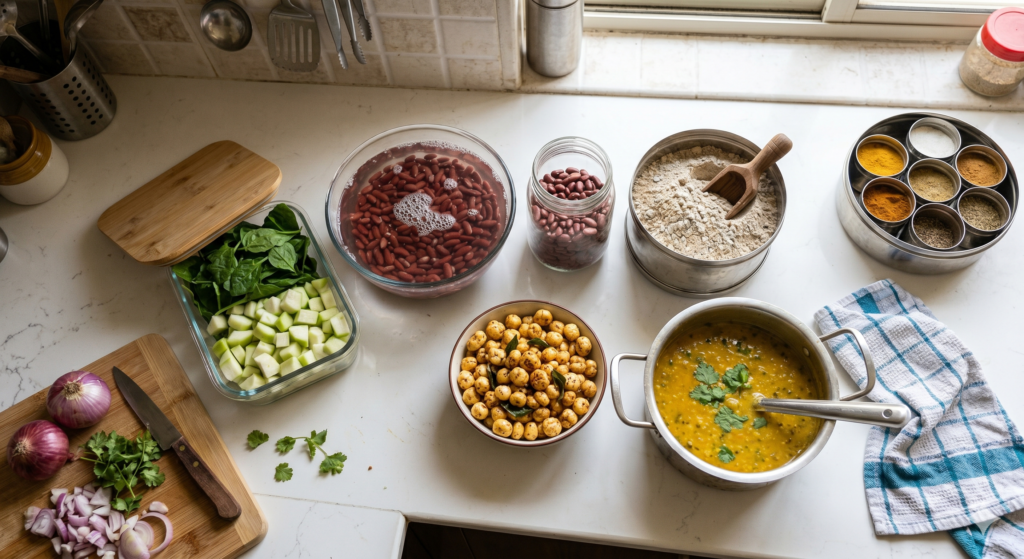
The single biggest reason people abandon a meal plan by Wednesday is not lack of motivation — it is friction. When dinner requires 45 minutes of chopping and cooking after a long workday, the takeaway app wins. A small amount of weekend preparation removes that friction for the rest of the week.
Spend 60–90 minutes on Sunday doing the repetitive work in advance: soak your dals and beans, wash and chop vegetables and store them in airtight containers, roast a batch of makhana for snacks, and pre-mix any flour blends you plan to use. Cook one or two base items — a large pot of dal or a sabzi that keeps well — so that on busy evenings the meal is mostly assembly rather than cooking from scratch. The goal is not to cook the entire week at once, but to make the healthy choice the easy choice when you are tired.
Indian diet plan for weight loss for women
The 7-day plan above works for women too. Many women with a sedentary routine start around the 1,200–1,500 kcal range, but the right number depends on your height, weight, age and activity, so check with a doctor or dietitian. A few points matter especially for women:
- Iron: include green leafy vegetables, pulses, and meat or fish if you eat them. Pair them with vitamin C foods like lemon or amla to help absorption.
- Calcium: keep curd, milk, paneer or ragi in your day for bone health.
- PCOS, thyroid or diabetes: the same principles apply, but follow your doctor’s advice on calories and medicines.
- Pregnancy and breastfeeding: this isn’t the time for a weight-loss diet. Speak to your doctor about healthy eating instead.
How much weight can you lose in one month?
A realistic, sustainable rate is about 0.5 kg (1 lb) a week, which is around 2 kg in a month. You may see a bigger drop in the first week, but much of that is water. Losing weight much faster usually means eating too little, which makes the plan hard to keep up and can cost you muscle. Track your waist every two weeks as well as your weight. For Indian adults, a waist of 90 cm or more for men and 80 cm or more for women is a sign of abdominal obesity.
Food works best with movement. Add 150–300 minutes of activity a week with our home exercise plan, and swap sugary drinks using our weight loss drinks guide.
The Bottom Line
A successful Indian diet plan for weight loss is not about exotic superfoods or giving up the meals you grew up with. It is about three things: choosing better versions of your everyday grains and dals, becoming honest about the oil, ghee and sugar that hide in your cooking, and building a week of meals you can actually sustain. Pair this with regular movement and adequate sleep, stay consistent rather than perfect, and review your progress with a healthcare professional — that combination is what moves the scale for the long term.
Frequently asked questions
What is the best Indian diet plan for weight loss?
The best plan is one you can follow for months. Build meals around vegetables, dal or other protein, and whole grains or millets. Measure oil and ghee, cut sugary drinks and fried snacks, and eat in a moderate calorie deficit. A 7-day vegetarian plan like the one above is a practical starting point.
How many calories should I eat to lose weight on an Indian diet?
Many adults lose weight at around 1,200–1,800 kcal a day, depending on sex, size, age and activity. Women with desk jobs are often near the lower end and active men near the higher end. Don’t go below 1,200 kcal without medical supervision. A doctor or dietitian can set your target.
Can I eat rice and still lose weight?
Yes. You can eat rice and lose weight if you control the portion, pair it with dal and vegetables, and keep your total calories in a deficit. Try a smaller bowl, choose brown, red or parboiled rice sometimes, and swap one rice meal for millets like jowar, bajra or ragi.
How much weight can I lose in one month with an Indian diet plan?
A healthy, sustainable target is about 2 kg a month, or roughly 0.5 kg a week. You might lose more in the first week, mostly as water. Faster loss often means eating too little, which is hard to maintain. Combine the diet with regular exercise and track your waist as well as the scale.
Is this Indian diet plan suitable for women?
Yes, the vegetarian plan suits most women, often at the 1,200–1,500 kcal level. Make sure you get enough iron, calcium and protein. Women who are pregnant, breastfeeding, or managing PCOS, thyroid problems or diabetes should get personal advice from a doctor or dietitian before starting.
What should I avoid eating for weight loss in India?
Limit maida products, deep-fried snacks like samosas and pakoras, namkeen, mithai, sweetened chai, packaged juices and sweet lassi. Watch the oil and ghee in tadkas and gravies, and heavy restaurant curries with cream. You don’t need to ban these foods, but keep them occasional and small.