By Balveer Singh Rathore, Editor · Last updated: September 26, 2026 · How we write
The best high-protein vegetarian foods in India are soya chunks, pulses (dal, rajma, chana), peanuts, seeds, paneer, tofu, curd and milk, and eggs if you eat them. ICMR-NIN recommends 0.83 g of protein per kg of body weight daily for healthy adults, which is about 54 g for a 65 kg man and 46 g for a 55 kg woman.
How much protein do vegetarians need?
The ICMR-National Institute of Nutrition (2020) sets the Recommended Dietary Allowance (RDA) for healthy Indian adults at 0.83 g of protein per kg of body weight per day. For a reference 65 kg man that’s about 54 g, and for a 55 kg woman about 46 g. Pregnant and breastfeeding women, older adults, athletes and people doing strength training often need more, so ask a dietitian for a personal target.
Most Indian vegetarian diets are heavy on cereals (rice, wheat) and lighter on protein. Adding a protein source to every meal is the easiest fix.
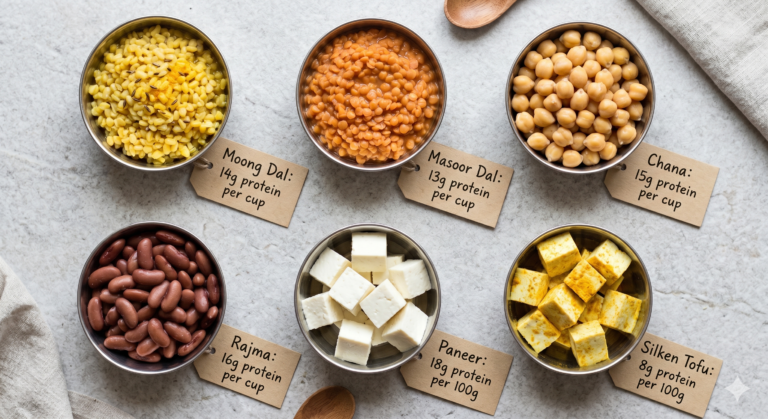
25 high-protein vegetarian foods in India (per 100 g)
Values are approximate protein per 100 g of raw or dry food, based on USDA FoodData Central and Indian food composition data. Brands and varieties differ, so check the label. Cooked pulses contain much less per 100 g because they absorb water (for example, cooked dal is about 7–9 g per 100 g).
| Food | Protein per 100 g | How to eat it |
|---|---|---|
| Soya chunks (dry) | about 50 | Cook in curry or pulao |
| Soybeans (dry) | about 36 | Soak and cook like chana |
| Hemp seeds | about 32 | Add to smoothies or salads |
| Pumpkin seeds | about 30 | Sprinkle on salads, curd |
| Peanuts | about 26 | Handful as snack, chikki without much sugar |
| Urad dal (dry) | about 25 | Dal, idli, dosa |
| Masoor dal / lentils (dry) | about 24 | Dal, soups |
| Moong dal (dry) | about 24 | Dal, chilla, sprouts |
| Rajma (dry) | about 23 | Rajma chawal, salads |
| Cheese (cheddar-type) | about 23–25 | Small portions; it’s high in fat and salt |
| Besan (gram flour) | about 22 | Chilla, dhokla |
| Almonds | about 21 | Small handful as snack |
| Sunflower seeds | about 21 | Trail mix |
| Kabuli chana (dry) | about 20 | Chole, hummus, salads |
| Flaxseeds | about 18 | Ground into roti dough or curd |
| Sesame seeds (til) | about 18 | Chutneys, til laddoo |
| Paneer | about 18–20 (varies by brand) | Bhurji, tikka, curry |
| Chia seeds | about 17 | Chia pudding, drinks |
| Quinoa (dry) | about 14 | In place of rice |
| Oats | about 13–17 | Porridge, chilla, overnight oats |
| Eggs (for eggetarians) | about 13 | Boiled, bhurji, omelette |
| Greek yogurt / hung curd | about 10 | Dips, breakfast bowls |
| Tofu (firm) | about 8–16 (varies by type) | Stir-fries, bhurji |
| Green peas | about 5 | Matar paneer, pulao |
| Milk / regular curd | about 3–3.5 per 100 ml or g | One glass (250 ml) gives about 8 g |
Best high-protein vegetarian foods by type
Pulses and legumes
Dal, rajma, chana, moong, urad and soybeans are India’s everyday protein. They also provide fibre, iron and folate. A katori of thick dal gives roughly 7–10 g of protein, depending on how much dry dal goes into it.
Soy foods
Soya chunks, soybeans and tofu are among the richest plant proteins and contain all essential amino acids. Soya chunks are inexpensive and absorb curry flavours well.
Dairy (and eggs for eggetarians)
Paneer, curd, hung curd, milk and cheese provide high-quality protein and calcium. Choose low-fat options if you’re watching calories. Eggs are an easy, complete protein if you eat them.
Nuts and seeds
Peanuts, almonds, pumpkin, hemp, sunflower, flax, chia and sesame seeds add protein and healthy fats. They’re calorie-dense, so a small handful (about 30 g) a day is a sensible portion.
Grains and millets
Oats, quinoa, and millets like bajra and ragi add some protein. They’re best paired with dal or dairy to make a more complete protein meal.
Do vegetarians get complete protein?
Yes, if you eat a variety of foods over the day. Pulses are low in methionine and cereals are low in lysine, but together they complement each other. Classic Indian combinations already do this:
- Dal and rice, or dal and roti
- Rajma chawal
- Idli or dosa with sambar
- Khichdi (rice + moong dal) with curd
- Chole with roti
- Besan chilla with curd
You don’t need to combine them in every single meal. Eating a mix across the day is enough.
Sample high-protein vegetarian day (about 70–80 g protein)
| Meal | Example | Approx. protein |
|---|---|---|
| Breakfast | 2 moong dal chillas + 1 bowl curd | about 15 g |
| Mid-morning | 1 glass milk or buttermilk + handful of peanuts | about 14–16 g |
| Lunch | 2 rotis + 1 katori rajma + salad | about 13–15 g |
| Snack | Roasted chana (30 g) + fruit | about 6 g |
| Dinner | 100 g paneer bhurji + 1 roti + 1 katori dal | about 25–28 g |
Totals depend on portion sizes and brands, so treat these as rough estimates.
Easy ways to add more protein
- Add a spoon of roasted chana or peanuts to poha and upma.
- Mix besan or soya flour into roti dough.
- Swap one snack for a glass of milk or a bowl of curd.
- Use hung curd or Greek yogurt for dips.
- Add paneer, tofu or soya chunks to pulao and sabzi.
- Keep roasted makhana and chana for snacks instead of namkeen.
High-protein vegetarian foods for weight loss
Protein keeps you full for longer, which can help control hunger when you’re eating fewer calories. Good low-calorie choices are dal, sprouts, tofu, low-fat paneer, curd, buttermilk and soya chunks. Go easy on nuts, cheese and fried paneer dishes, which are calorie-dense. For a full plan, see our Indian diet plan for weight loss and intermittent fasting guide.
Note: people with kidney disease may need to limit protein. Check with your doctor before increasing it.
Frequently asked questions
Which vegetarian food has the most protein?
Soya chunks are among the highest, with about 50 g of protein per 100 g dry. Other rich sources include soybeans, hemp and pumpkin seeds, peanuts and dry pulses like urad, moong and masoor, which have about 23–26 g per 100 g before cooking. Paneer gives about 18–20 g per 100 g.
How can vegetarians get 60 g of protein a day?
Include protein at every meal: a bowl of curd or chillas at breakfast, dal or rajma at lunch, milk or roasted chana as snacks, and paneer, tofu or soya chunks at dinner. Spreading 15–20 g over three or four meals makes 60 g easy to reach.
How much protein do I need per day?
ICMR-NIN recommends 0.83 g of protein per kg of body weight daily for healthy Indian adults. That’s about 54 g for a 65 kg man and 46 g for a 55 kg woman. Pregnant women, older adults and people who strength-train often need more.
Is paneer or tofu better for protein?
Both are good. Paneer usually has more protein per 100 g (about 18–20 g) but also more fat and calories. Firm tofu has about 8–16 g, depending on the type, with less fat. Choose based on your calorie goals and taste, and check labels.
Can vegetarians build muscle without eggs or meat?
Yes. With enough total protein from pulses, soy, dairy, nuts and seeds, plus regular strength training and enough calories, vegetarians can build muscle. Spreading protein across meals and eating a variety of sources helps cover all essential amino acids.
Are sprouts high in protein?
Sprouts are healthy, but they have less protein per 100 g than dry pulses because they contain a lot of water. Mung bean sprouts have about 3 g of protein per 100 g. They’re low in calories and rich in fibre, so they make a good snack alongside other protein sources.